One Reader, One Next Step: Practice-Area Pages for Lawyers
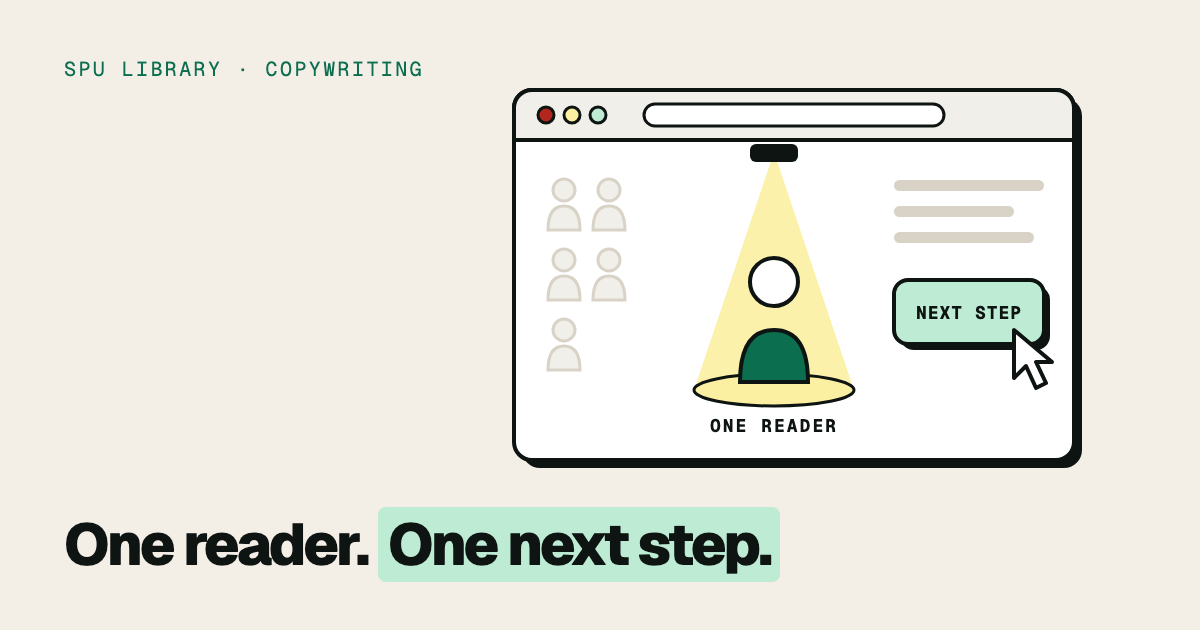
- For lawyers, a practice-area page works when it's written for one ideal client and ends with one clear next step.
- AI drafts tend to address everyone, talk about the firm and close with a vague 'contact us today.'
- Write from the client's side, cut every word that doesn't serve them, and never publish a claim you can't back up.
Ask an AI tool to write a practice-area page for a law firm and you'll get one in seconds. It will speak to "individuals and businesses alike," describe the firm's "commitment to excellence," and end with "Contact us today for a consultation." Nothing in it is wrong. Nothing in it makes a particular person pick up the phone, either. A 2009–2010 Solo Practice University course on copywriting explains why, and how lawyers can fix it.
Every sentence has one job
The course was Pen and Perception, a run of branding and copywriting lessons for solos. Its second copywriting lesson opened with the rule the rest hangs on. As the instructor, James Chartrand, put it:
"If you take nothing away from this course but one thing, let it be that the primary purpose of every sentence you write is to get the next sentence read."
The headline gets the first sentence read. The first sentence gets the second one read. At the end, you ask the reader to act. The lesson pointed out why this is hard for lawyers: school trained you to write long, careful arguments for readers who had to read them. "But people who read your copy don't have to do so." A visitor to your practice-area page can leave after one line, and most do.
That's the standard to hold an AI draft to. Not "is it accurate?" (it still has to be) but "would a worried person keep reading past this sentence?"
Write for one reader
The course's lesson on target markets used an example that still works. A lawyer handles speeding tickets. Two people land on the website: a company CEO and a new driver, both with big tickets. The CEO wants it gone, fast, with no jargon and no hand-holding. The new driver is nervous, upset about asking their parents for help, and hoping a friend was right that tickets can be contested.
"You can help both people, but your site content can't reach both of these people equally well."
So you pick. Your ideal client gets the page. Everyone else is welcome to call, but the page isn't written for them. SPU's archive has more on defining your ideal client and connecting with them, and the same rule applies to a single page.
This is the first place AI drafting goes wrong. A general-purpose model doesn't know who hires you, so it writes for everyone: "Whether you're a business owner or a first-time driver..." That hedge is the CEO-and-new-driver problem in one sentence. You know who your best clients are. Your consultation notes say how they talk, what they're afraid of and what they ask first. Give the tool that reader, or write the page yourself, and cut every "whether you're..." that survives.
Write from their side of the desk
The next lesson was about perspective. The lawyer thinks the client wants a lawyer with degrees and wins. The client wants the problem to go away:
"Your ideal client isn't really coming to you for legal assistance. That's just the means to the end."
Under the legal problem, the course said, the client wants comfort, reassurance, peace of mind, justice or resolution. Its instruction for the copy was five short sentences: "No jargon. No big words. No lofty terms. No all-about-you. No how-great-you-are."
AI drafts drift the other way. Count the sentences that start with "We," "Our firm" or the firm's name. In a typical generated page, that's most of them. Flip them. "Our firm has extensive experience in custody disputes" becomes a sentence about the parent reading it, and what they can expect. Credentials still belong on the page, the course said, but as backup for a decision the reader is already making for other reasons. If you've been on the other side, SPU's piece I Hate Being the Client is a useful reminder of how that side feels.
Same page, two drafts
Three sentences, then a red pen
Lawyers' copy, the course said, is usually too long, because legal writing rewards completeness. Its test was three sentences: one that sums up your practice, one that describes your ideal client, and one that says why that client is better off with you. Then go through the page with a red pen and strike everything that doesn't serve those three sentences. "The long legalese comes later, after this client has decided to hire you."
The three-sentence test is close kin to the art of the elevator pitch, and it's a good brief to hand an AI tool before it writes anything. It's also a good filter after. AI drafts pad: "very," "highly experienced," "dedicated to providing exceptional service." The course's red-pen targets were exactly those words.
The red pen has a second job now. Generated copy can include claims about you that aren't true: years in practice, results, a specialty, "proven" outcomes. ABA Model Rule 7.1 says: "A lawyer shall not make a false or misleading communication about the lawyer or the lawyer's services" (ABA; California's Rule 7.1 uses the same sentence). The ABA version adds that a communication is misleading if it "omits a fact necessary to make the statement considered as a whole not materially misleading" (Attorney at Work). States adopt their own versions, so check your own jurisdiction's rules. Practically: if you can't back a sentence up, it comes out, however good it sounds.
End with one next step
The course's lesson on goals was blunt about what a page is for:
"Copy isn't art that you display to have people peruse and then nod appreciatively. Copy is there to compel an action."
It asked lawyers to map the action they want: if the goal is more clients, a visitor has to find the page, land on it, see how to reach you and do it. Then tell them. "A good call to action doesn't just tell people what to do. It tells them how to do it." The reason was practical: "Nothing is intuitive online, and what we think is obvious common sense very often isn't apparent to a site visitor."
A later lesson added the failure that still turns up on law firm sites: "The number one silliness people do with their copy? They forget to give the reader some way of acting on the command." It also warned about a typo in the phone number, and the call that never comes back.
"Contact us today" is the AI version of that silliness. It tells the reader to act without saying how, or what happens next. A better close answers the questions a nervous person has at that moment: Who picks up? What should I have ready? How long is the first conversation, and what does it cost? Only you can answer those truthfully. Don't let a draft invent a "free consultation," office hours or a response time you don't actually offer. Then check the number and the form yourself, on your phone. SPU's older advice on closing the deal starts here, on the page.
Before a practice-area page goes live
- One readerNo "whether you're..." hedges
- Their side of the deskCount and flip the "we" sentences
- Three sentences, red penCut what doesn't serve them
- Every claim backed upNothing false or misleading
- One next step, and howTest the number and the form yourself
If you'd like a second pair of eyes on your practice-area pages before you rewrite them, SPU offers a free law firm website review.
What else the course covered
This post draws on six copywriting lessons. Pen and Perception alternated those with branding lessons on color, logos, standing out and narrowing your focus, and it closed with lessons on home pages, comforting copy and clients' fears. We covered its case for writing in your own voice in Your Voice Is Your Brand. For more on law firm marketing from the archive, browse SPU's marketing posts.
Build pages that get the call
Rewriting your own website is easier with people who will tell you the truth about it. SPU membership gets you the community, monthly strategy sessions and the course library, alongside other solo and small firm lawyers working on the same problems.
Get one practical lesson for your firm every week.
Free, from practicing lawyers. Every issue includes a lesson from the archive. Unsubscribe anytime.
The SPU Team writes and edits Solo Practice University's articles. Susan Cartier Liebel founded SPU in 2009 to teach lawyers the practical side of building a practice, the part law school leaves out, with courses taught by practicing lawyers. Today SPU is a community for solo and small-firm lawyers, with an AI Fluency program for firms putting AI to work. Nothing here is legal advice: check your own jurisdiction's rules.
About Solo Practice University →