Legal Research on a Budget: What Solo Lawyers Need Now
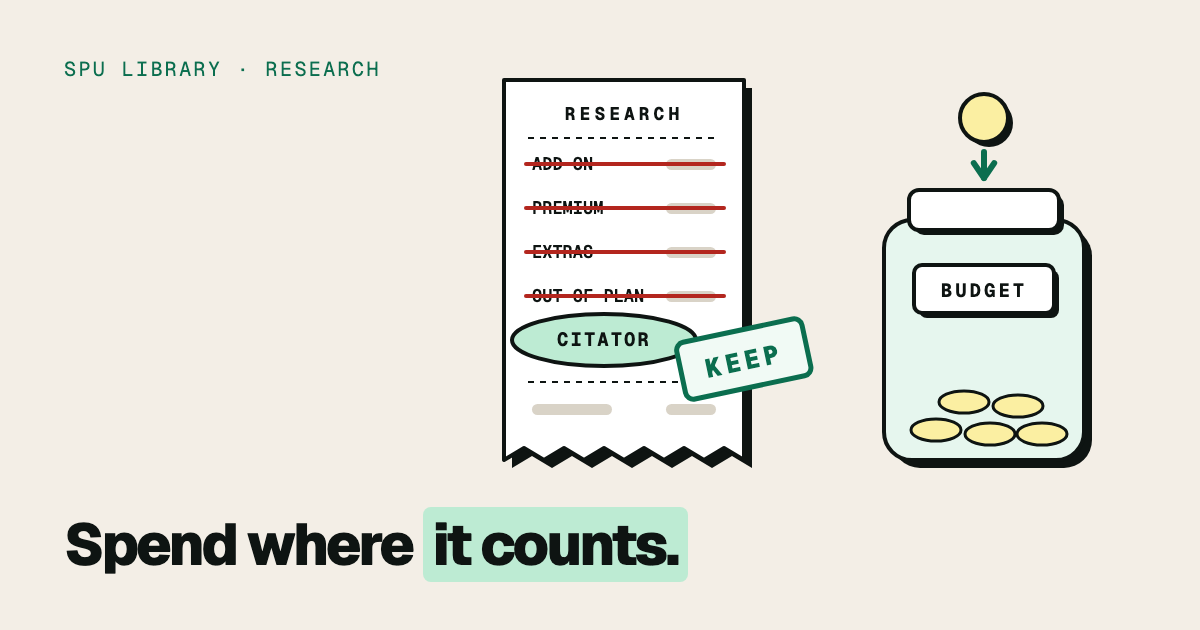
- For solo lawyers, a lean research setup starts with the free legal research most state bars include in membership.
- Pay for a real citator before anything else; AI drafts hand you more authorities to check, not fewer.
- Shop AI research add-ons the way the course said to shop research plans: know what's in the plan before the bill arrives.
Solo lawyers and small law firms face a research bill that big firms barely notice. Now there's a second line on it: AI research features, sold as add-ons or premium tiers. The question is the same one Solo Practice University's legal research course asked a decade and a half ago. What do you actually need, and what can you stop paying for?
Buying research is still like buying a used car
The course is Real World Legal Research, taught for SPU between 2009 and 2014 by Richard Maseles. Its syllabus opened with a question every new solo hits: what do you do when Westlaw and Lexis aren't free anymore? Its answer started with how the big services sold their plans:
"Buying Wexis plans is a LOT like buying a used car, complete with buyer's remorse."
"Wexis" was the course's shorthand for Westlaw and Lexis together. The complaint was pricing you couldn't see. Corporate websites sent the instructor to "contact your local representative," and a sales rep could usually do better than the quoted price, so "the sticker price is just the beginning." The bigger trap was the plan's edges. On a limited plan, the course warned, "going outside the plan can be a financial disaster-- and you won't know how much of a disaster it will be until you get your bill."
The products have changed. LexisNexis now sells Lexis+ with Protégé, which replaced Lexis+ AI in February 2026 (LawNext, LexisNexis). Thomson Reuters added CoCounsel Legal, with its Deep Research feature, in August 2025 (Thomson Reuters, LawNext). The shopping advice hasn't changed. Before you sign, get in writing what's included, what costs extra, and what happens when you click outside the plan.
Start with what your bar already gives you
The course's cheapest advice was also its most practical:
"If Casemaker is what your state bar offers for free research, then by all means try it."
The names have moved around since. Fastcase and Casemaker merged in 2021 (ABA Journal, LawNext). Fastcase merged with vLex in 2023 (Texas Bar Blog, LawNext), and Clio completed its $1 billion acquisition of vLex in November 2025 (ABA Journal, LawNext). That service has long been the dominant bar member benefit. Decisis, launched by LexisNexis's parent company RELX, has been winning some state bars away from it (LawNext, May 2025, LawNext, November 2026).
The practical step is the same either way: log in to your bar's member portal and find out what you already have. We've written before about whether bar associations benefit solos. Free research is one of the clearest answers.
Add the free public sources the course recommended. Google Scholar still lets you search federal and state case law at no cost (Google Scholar, Morningside University guide). The instructor's favorite use was pulling a case fast to copy its exact language. Statutes, regulations and court rules are on government sites. Just remember that a free site may show only the current version, and the version that governs your matter may be older.
A lean research setup for a solo firm
The one line item you don't cut
The course was relaxed about almost every cost except one. In the middle of a lesson on low-cost services, the instructor stopped to shout:
"YOU NEED SHEPARD'S OR KEYCITE. Period."
A citator tells you whether a case is still good law and how later courts have treated it. When it was taught, the course judged the cheaper services' citator substitutes "not ready for prime time." Those services have changed since, so test what your bar's tool offers today against what you need. The instructor's reason for paying for a full citator was blunt. Why would you need one that covers other states and federal courts? "For every time you cite to one of those cases."
AI raises the stakes. One lesson, written from the court's side of the bench, listed the poor lawyering court staff see every day. It started with "lawyers who don't shepardize, lawyers who fudge on authority." An AI draft can hand you ten authorities in a minute. Each one still needs checking, and the cost of skipping it is no longer just an annoyed judge. Our post on hallucinated citations as a malpractice risk covers what that looks like. When you're cutting the research budget, cut somewhere else.
Let someone else do the first pass
The course's other money-saver was finding research someone has already done. It ranked the options from worst to best. Law review articles came last for practical use, briefs bought from the big services next, then winning briefs from a similar case. At the top sat something most lawyers overlook: a judge's opinion that analyzes your issue.
"…every opinion is, in its own way, a brief."
Judges want their reasoning to persuade the parties and survive appeal, the instructor explained, and they usually have a clerk or staff attorney helping. A good opinion on your statute is a researched, cited argument you can read for free. The same goes for older, cheaper secondary sources. The course suggested keeping your bar review books and skipping the yearly update on a practice-area treatise in slower-moving areas, with one rule attached:
"…like all secondary resources, you start your research there-- you don't end it there."
That's also the right way to treat an AI research summary. It's a first pass, like a treatise or someone else's brief. It points you to the primary law. It isn't the primary law. Our companion post on finding the rule before you trust AI covers how to check what the summary hands you.
Research someone already did: the course's ranking
Spend on infrastructure, not shiny features
None of this is an argument against paying for good tools. It's an argument for knowing why you're paying. The SPU column on budgeting for what you really need made the same case for a solo's whole budget. John O'Connor, founder of Associate and SPU's Professor of AI Fluency, frames it as building now rather than later:
"It changes the landscape, and makes it more important to build infrastructure now. We need solo ants, not grasshoppers."
In Aesop's fable, the ant stores food for winter and the grasshopper doesn't. For research, infrastructure means a setup you understand: free tools you've actually tested, a citator you trust, the treatise for your practice area, and AI features you've priced and checked, not ones you clicked into by accident. The same goes for the rest of your tech spending, your firm's website included. SPU offers a free law firm website review if you'd like a second opinion on yours. For more on tools, see our technology coverage.
Ethics and fee rules on passing research and AI costs to clients vary, so check your own jurisdiction's rules before you bill a client for either.
This post draws on a slice of the course. It also covered reading statutes and opinions, regulations, legislative history, search techniques, the portable law library, asking other lawyers for help, legal ethics research and legal writing.
Keep learning with SPU
SPU membership gets you the community, monthly strategy sessions and the course library, so you can build a research setup that fits a solo budget and holds up in court.
Get one practical lesson for your firm every week.
Free, from practicing lawyers. Every issue includes a lesson from the archive. Unsubscribe anytime.
The SPU Team writes and edits Solo Practice University's articles. Susan Cartier Liebel founded SPU in 2009 to teach lawyers the practical side of building a practice, the part law school leaves out, with courses taught by practicing lawyers. Today SPU is a community for solo and small-firm lawyers, with an AI Fluency program for firms putting AI to work. Nothing here is legal advice: check your own jurisdiction's rules.
About Solo Practice University →