We are still in the middle of hurricane season and if you live on the eastern seaboard you have already felt the initial impact of Irene. I say initial because the aftermath is just as disruptive as you and your clients may be without power for weeks, lost your home to wind or flooding or suffered significant damage and will be caught up in the issues surrounding claims as well as reclaiming some semblance of your pre-hurricane life. But this disruption is no different then a wicked snowstorm or a tornado or any other natural disaster mother nature wants to hurl our way.
The big difference is we now have clients not just living in our towns or counties or even our states anymore. The truth is you could be perfectly fine living and working remotely in Texas and an unexpected freak ice storm or mudslide could wreak havoc on millions of homes, businesses and home based businesses in California where you are barred and have clientele. Or you could have a national clientele based upon your area of practice and support staff working remotely and lose connectivity with everyone. The majority rely upon their cell phones, internet and cable or DSL for communications to clients. and for a increasing number, it is the sole basis of communications.
What happens when your power is down for ten days during an unexpected emergency? Or you conduct business communications while traveling via your iphone, blackberry, cell phone, internet, iPad and you hit an unserviced area for an extended period of time and have to remain unexpectedly? What happens if your office, whether home-based or downtown is flooded or a tree falls on it during a nor’easter and your office is a total loss? Client communications are interrupted abruptly. Emergency preparedness for yourself is one thing. What is your emergency preparedness for your business?
While events can be planned for to a point thanks to the wonders of the Weather Channel, a plan for such an event should be in place at all times. Right now I can’t reach people I care about who are located in flood areas deemed ‘catastrophic’. It’s very distressing.
We are so heavily reliant upon connectivity that it begs the question: What do you do when you can’t communicate via instantaneous technologies and you are dealing with clients not just in your immediate area suffering the same fate as yourself (and who will generally be more sympathetic) but across the country or the world who may be less compassionate?
First, your disaster preparedness plan should be communicated to the client at the onset of the relationship regardless of where you live or practice. It could be snow storms, hurricanes, floods, wildfires. It doesn’t matter. In the event of an emergency orchestrated by mother nature what can the client expect regarding communications? For instance, in the event of such an emergency, imagine if you have in place a plan whereby the client knows if there is a serious weather condition impacting where you work they can contact another law firm in another part of the country, or a fellow blogger who will post the emergency status for your firm? (Yes, they can watch the news, but honestly, you can’t rely upon that. Nor is it good planning.)
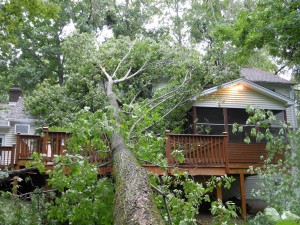 For instance, I live in the Northeast and our state’s shoreline got slammed. Towns will be without power for one to two weeks. I am very fortunate to still have power (although I had a 70 foot tree fall which took out my deck) and I am very grateful the damage was limited to something easily repairable and no one was harmed. However, this could be you but without power and an office flooded without your client files stored in the clouds and accessible from another location. Here are my suggestions:
Plan for any anticipated event such as a hurricane or snowstorm
1. Notify your clients ahead of time via e-mail that communications may be interrupted.
2. Advise them to check the blog of (fill in the blank) if e-mails or phone messages are not returned within the agreed to number of hours or to call a specific phone number of another law office. Investigate automated phone calls. (Our town contacts us via robo-phone to provide information which, or course, has it’s limits if phone service is down!) Or if for some reason they do not receive the scheduled phone call for a consultation they should contact someone or a firm you have pre-determined. Have a designated arrangement with someone who will seek to contact you and if you still remain unavailable, they will post (if they are a blogger) or notify your clients as you have directed which does not violate your clients’ confidentiality. Kind of like checking the news for school cancellations.
Even if your clients don’t have pressing legal matters, regardless the nature of your relationship, when someone relies upon communications and you primarily rely upon technology in all its incarnations for those communications (as most of us do), when the lights go out your clients have the right to be informed and you have the obligation to inform.
Reach out to your clients in distress.
So often posts are lawyer-centric but in an emergency they should be human-centric. You may be on the other side of the country or simply escape unscathed in a natural disaster but your clients may not be as lucky. Even if you don’t have pressing business with your clients or even a current matter, it is both compassionate and makes good human sense to reach out to your clients, past and present, to find out if they are okay. Give them a call. Leave a voice mail. Send them an e-mail. Find out if there is anything you can do to help them because you want to help them…not because you are scoping out new business. Even if you can’t reach them initially they’ll get your voice mail or e-mail eventually. They may need the name of an independent insurance adjuster. They may just need the name of a tree removal service or carpenter. You are part of a larger community and you should reach out to your clients to see if they are okay and if you can help in any reasonable way. Sometimes just knowing someone cares can make all the difference.
Have you set up an alternate client communications plan for just such an emergency? Have you reached out to your clients since the hurricane?


Susan,
As always a timely piece. I am without Internet services at home and office. For the past two days I could not get out of my road to find reconnection to the Internet. It has been interesting to communicate with my clients via landline in some instances, where text and email had been the norm. I have limited 3G as well.
I advised my clients of the impending storm and my office’s vulnerability to breaks in internet service if the hurricane came through as predicted. The pre-recorded or canned email to clients before the storm is a must.
However, after the storm and it’s break in service, trying to communicate regularly with clients has been a challenge. I have been able to get to Internet service on my 3G system locally, but some of my clients have not. We should remind our clients, especially if they have looming court dates or documents due for a transaction, that they should follow the advice below as well as Susan’s advice in this post.
I suggest, for those of us who are using cloud technology to go old school with contact information. Even when the Internet is out, my calendar and address books are working (I do both google and paper). I can see what I need to do and who I need to do it with. If you maintain cloud files you may want to put them in an email file or burn them to a disc for safe keeping until the storm is over and you can once again access them via the cloud.
It is not a perfect system, however the documents you may need will be at your finger tips as long as those fingertips have an electrical source. Luckily I have electric, via my generator, so I can access my files.
Thank you Susan for your advice. I hope we all heed this warning and make sure we are prepared and can respond to our clients after such a catastrophic event.
Susan, What a great post. I am definitely taking this to heart. Our office has been out of power since Sunday and it is terrible to be out of synch with clients. I am embarrassed to admit that we had no plan, and not even a thought that this could be our reality. I’ve taken advantage of the inaccessiblity of my office to help some of my devastated neighbors. Today I am finally able to send out an email newsletter about our office which will only be read by those unimpacted (that is, those with power), but at least they will know what is up. We will definitely put an emergency plan in place from this point forward.
Daphne,
I know you are in Vermont! Truthfully, many people don’t think about this or they think it won’t happen to them. I am so sorry for what is happening up there but glad to hear that you are well. And I hope your family, friends and clients are doing okay or will be ok as soon as the damage can be fully assessed.
Years ago as a solo, my malpractice carrier was very concerned about who would handle my files if something happened to me. The example that ran through my mind was along the lines of getting hit by a bus. The logical choice for me at the time was to designate the attorney down the hall who rented me my office space out of her firm. However, you make an excellent point concerning natural disasters because if one had happened in Philadelphia, we all would have been in the same fix. … Good to think about this before it happens.